
For years, Texas maintained a “low cost, low aid” model for public higher education. Tuition rates were kept well under national average and set by the state legislature.
That changed about 20 years ago. After a state budgetary shortfall in 2003, legislators passed House Bill 3015 to deregulate public university tuition. The bill went into effect September 2003 and changed the education code to allow governing boards of public universities to set designated tuition rates.
Prior to this, the Texas legislature had strict authority over tuition, mandating that the statutory and designated tuition rates be uniform across the state.
A 2016 study published in the Russell Sage Foundation Journal of the Social Sciences found that the cost of tuition accelerated across the state in the wake of deregulation. The formerly large gap between public university tuition rates in Texas versus other states closed in the years following deregulation.
Within the past several decades, the average cost of tuition for a four-year higher education institution has consistently risen at more than twice the rate of inflation.
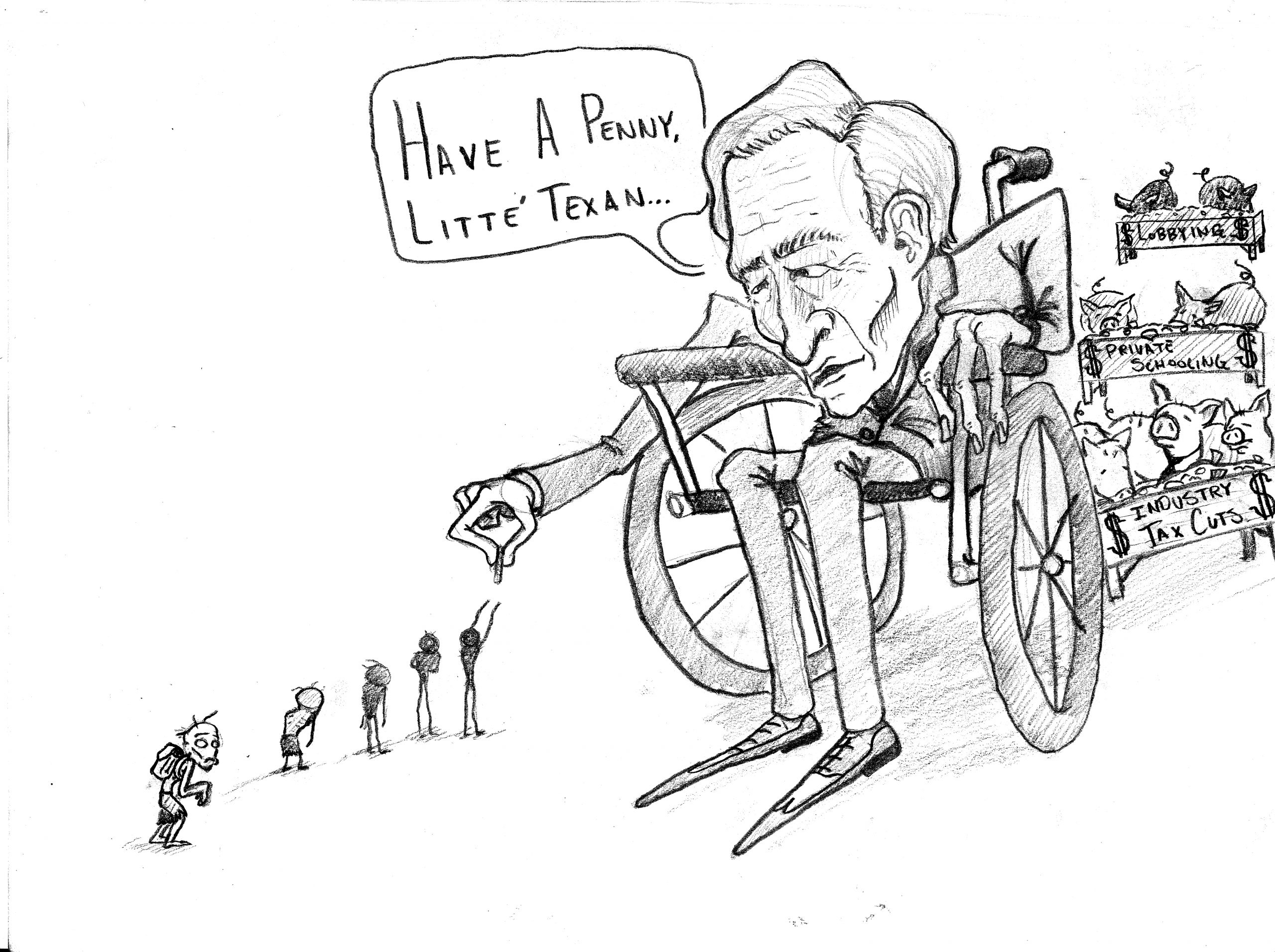
Considering the historical pattern of Texas being a more accessible, affordable education, the deregulation was a complete 180 of what the goal was. And now the Texas government’s choices make us wonder what their priorities are for higher education.
Within the past few years, the Texas legislature has passed bills like Texas Senate Bill 37 which restricts curriculum, along with increasing state oversight of public universities and limiting faculty senate authority. In 2023, they passed Texas Senate Bill 17, which prohibits diversity, equity, and inclusion (DEI) offices and severely restricted programs aimed at helping LGBTQ+ students.
So not only are tuition fees continuing to rise astronomically, but restrictions on freedom of speech and developing one’s own critical thinking skills is another discouragement for people to continue their education.
College is supposed to be for expanding students’ knowledge on different topics, situations, and environments: to meet new people, gain new experiences and make professional network connections for productive lives and careers.
Many in state government and the Texas legislature, including Gov. Abbott, completed a higher education to fulfill the position they are in now. They are now taking those same opportunities away and making them less accessible.
The deregulation of tuition was just the start of making higher education less attainable for lower income families. Now the legislatures’ choices create censorship and allow the government to have control over what students are consuming.
We should be able to develop new opinions on topics from views outside of our own. Censoring and limiting what we consume as students will only shrink that and create a world where we all think the same. The ongoing restrictions within our curriculum and increasingly high tuition costs create a world only one political ideology wants to live in. It’s a world where education is only accessible to those with money, connections, and privilege.
The answer is not controlling curriculum, censoring education, or creating the fear of e unemployment or arrest among faculty members.
The answer is the Texas legislature prioritizing fixing the financial gap in higher education and pouring that passion for regulation into what really matters – funding for materials and equipment; diverse and inclusive curriculum; and a financially attainable, quality education that fulfills what Texas higher education historically accomplished.
Editorials reflect the collective opinion of the editorial student staff members of the Foghorn News, Del Mar College’s student media outlet.