

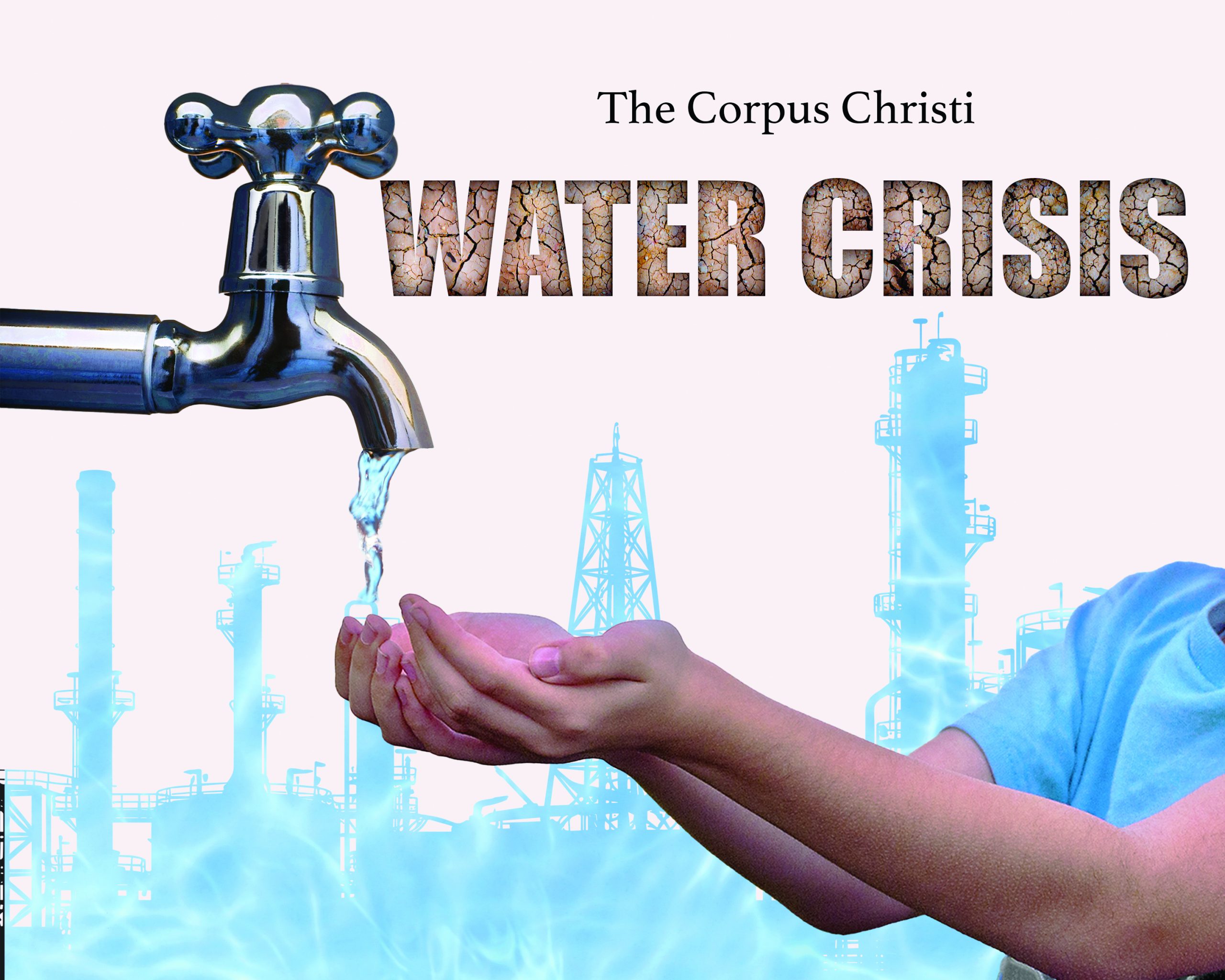
Corpus Christi will likely reach a Level 1 water emergency by September 2026, according to city officials. As a result, the city is now enforcing severe water restrictions
Restrictions include a ban on all outdoor watering, prohibiting home vehicle washing (commercial car washes are exempt), and limiting other activities that have higher-level water usage. The city began enforcing these restrictions once it declared the water crisis at Stage 3 in December 2024. Non-compliance citations were being issued starting in January and the Stage 3 water drought status has remained in place since.
During a city council workshop presentation April 21, city officials discussed the drought contingency plan, which states that a Level 1 water emergency will be declared if the city reaches 180 days of not having the capability to meet water demand.
Ongoing drought conditions could result in the city’s primary water sources to near depletion by mid-2026.
The city of Corpus Christi gets its water supply from four main reservoirs. Western supplies come from Choke Canyon Reservoir and Lake Corpus Christi, which flows into the Nueces River. Eastern supplies come from Lake Texana and the Colorado River, which flows into the Mary Rhodes Pipeline. This is all treated at the city’s treatment plan, where it undergoes purification and filtration steps to ensure it is safe to use. Then it’s distributed to residents, businesses, industries, municipalities and water authorities.
Drought stages and the restrictions you need to know
Stage 1 of the city’s drought contingency plan is referred to as a mild water shortage.
Key restrictions for Stage 1 prohibit watering between 10 a.m. and 6 p.m. Also, irrigation or sprinkler system usage is limited to one day per week. Corpus Christi enters Stage 1 when Choke Canyon Reservoir and Lake Corpus Christi’s combined reservoir storage level is at 40% or less. Water users are encouraged to reduce water usage by 5%.
Stage 2 of the city’s drought contingency plan is referred to as a moderate water shortage. Key restrictions include the same rules as Stage 1, with water users encouraged to reduce usage by 10%. Stage 2 is implemented when the combined reservoir storage level is below 30% capacity.
Stage 3 is referred to as critical water shortage, and where the city is at now. This is reached when combined reservoir levels are less than 20%. Water users are encouraged to reduce water usage15%. Key restrictions progressively increase to a stricter standard as drought conditions worsen. Lawn watering is prohibited, and all non-essential water use in city facilities and parks is turned off. While Stage 2 allows some lawn watering and hand watering, Stage 3 bans all lawn irrigation.
As reservoir levels continue to fluctuate, the city’s response will depend on both rainfall and long-term planning.
One of the solutions being discussed by city officials is the Inner Harbor Seawater Desalination facility. It was designed to provide a drought-proof water supply for Corpus Christi as well as the surrounding Coastal Bend areas, which would serve residential and industrial customers. The original design was intended to treat seawater and produce millions of gallons of pure water per day.
The Inner Harbor Desalination project is just one option out of several large-scale projects under consideration while the city is trying to diversify its options for maximizing productivity in getting back to a sustainable water supply.
However, the Inner Harbor Desalination project has faced criticism. One of the main concerns is how it could affect the Corpus Christi Bay ecosystem and surrounding areas. Corpus Christi City Manager Peter Zanoni said “from my own eyes, I can see that these plants don’t harm water bodies” at the City Council water workshop on March 27.
Other concerns included the ballooning cost of the facility, which is now estimated at $979 million, and its proposed location near Nueces Bay Boulevard and W. Broadway Street, adjacent to a historically Black and Hispanic neighborhood.
Zanoni stated that the city of Corpus Christi is conducting a “far field study” which is expected to give more insight on how exactly the facility will affect the environment, with preliminary report results expected at the end of April and final report results expected in mid June.
As reservoir levels continue to fluctuate, the city’s response will depend on both rainfall and long-term planning. For residents, understanding where the water comes from and how each stage works is becoming just as important as conserving it.