

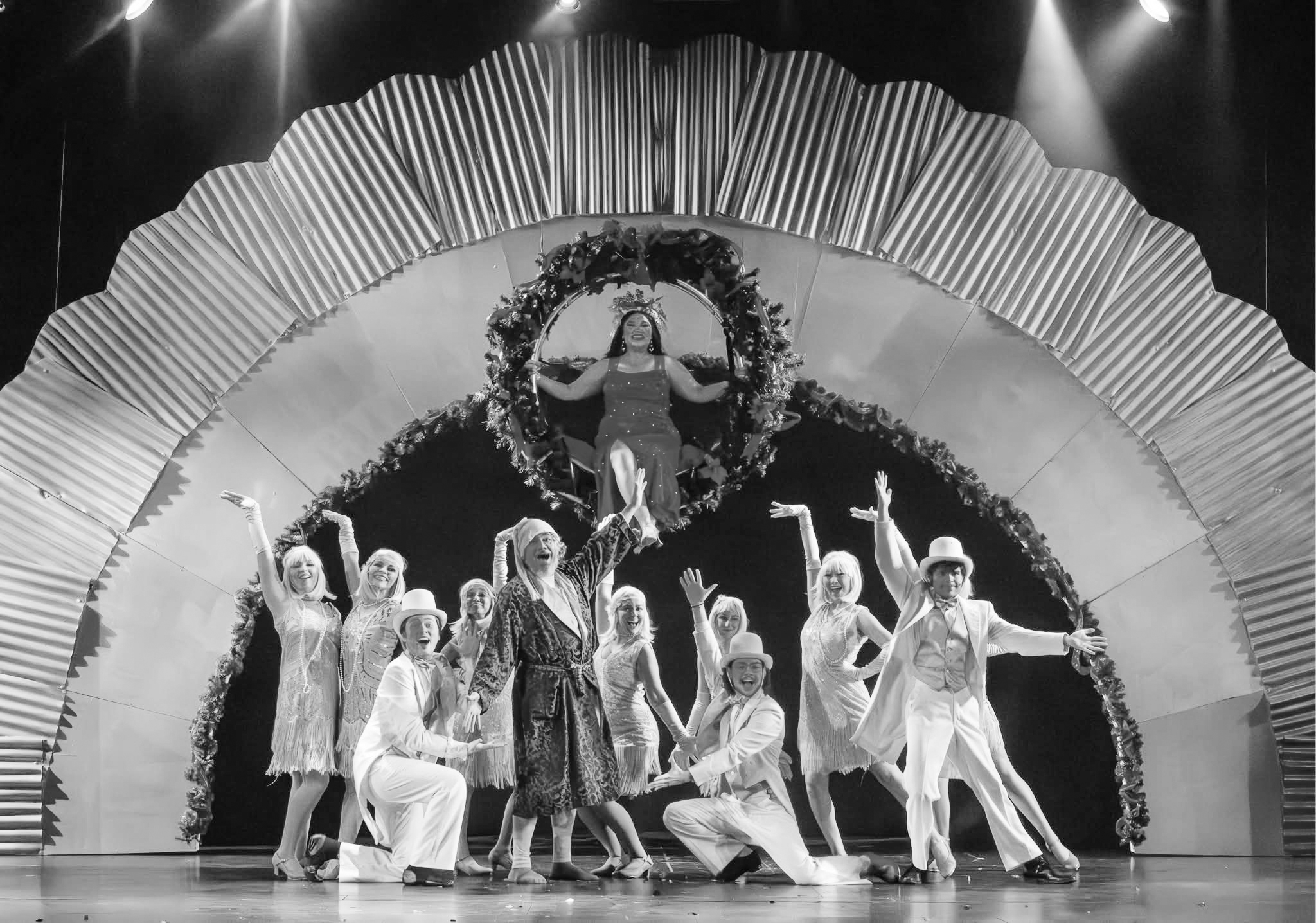
Over the past two years, I’ve been a part of Corpus Christi’s theater scene. In that same time, I’ve been through a few shows here at Del Mar College as well. There are plenty of differences between the two, and since I’m involved in another community show, I figured now’s the time to look back on it.
The first thing you have to do for any theater show is audition. Between community and college theater, these feel the same: you fill out a form and maybe provide a resume. Typically, community theaters will take your headshot, though college theater does not.
Once you’ve filled out the form, you’ll be assigned a number and then you’re ready to start learning material. At Harbor Playhouse, you’ll be asked to perform both a dance routine and sing part of a song, and depending on the director, you’ll be asked to read lines. At Aurora Arts Theatre, you’ll always be asked to do all three.
Del Mar is different. Here, singing and line reading are given more emphasis, with the dance portion always being skipped. Typically, this drama program does straight plays, so most of the time it’s just narrowing down through line reading as most of its shows have no singing or dancing.
While the process is always different depending on where you go, the outcome is always the same: you wait a few days for the cast list to be announced. For the community theaters, you’ll be called and offered a role; for Del Mar, your name will be printed alongside the rest of the cast and pinned to a board.
Once the cast list is out there, it’s time to rehearse! Rehearsals usually run from 6-9 p.m. from Monday to Thursday, though depending on the show it may change. For example, for “West Side Story” in 2025, we were staying until midnight toward the end of rehearsals to complete the show.
This year, I saw a tentative schedule at “A Chorus Line” auditions that listed Monday through Saturday rehearsals. From what I heard of the cast, they did indeed rehearse six days a week.
As your rehearsals end, you may come across something known as tech week, though it’s also affectionately known as “hell week.” These are the days before your first show, or opening night, when the people running lights, sound, and other backstage roles are introduced to the show.
At this point, you can kiss that 9 p.m. window goodbye! Most nights, you’re lucky to get out by 10. I’ve heard stories of shows running until midnight during tech, though I may have been lucky in this regard. Most shows I’ve done, we leave the theater for the night by 11.
From that point on, the show becomes a breeze.
All those weeks of hard work turn into you doing the same set of memorized dances and movements and lines every weekend. If it’s a community theater, the show typically runs between four and six weekends. If you’re here at Del Mar, the show only runs for two weekends, but those nights are chock-full of deals and specials for tickets.
The day-to-day tasks always change depending on how much progress the production has completed already. Typically, you get two weeks to work on the singing for musicals, and then you have four weeks to iron out the choreography and the blocking. For straight plays, all the movements are sorted out in one week and it is ironed out until tech week.
I’ve recently been through a similar production process for a musical by an independent collective, Fifth Wall Company. Their first musical, “tick, tick…BOOM!” opened April 22, and will have its final performance April 29 at Aurora Arts Theatre. The performance starts at 8p.m.